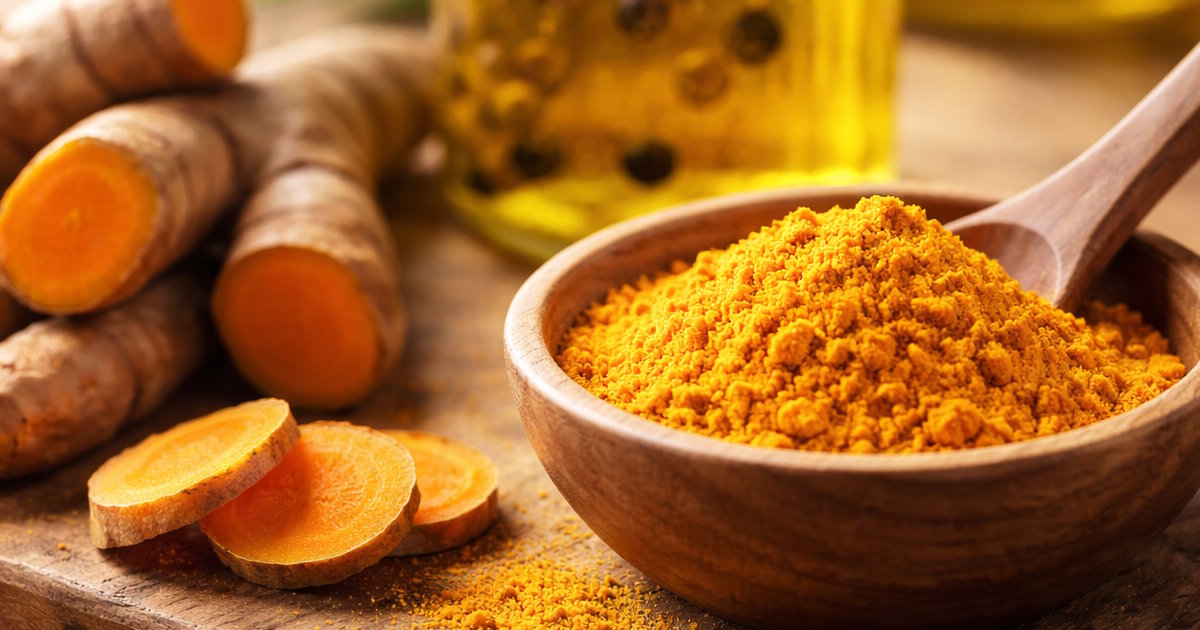
Turmeric's association with pain comes from curcumin, a biologically active compound that interacts with inflammatory pathways. Research results vary widely because curcumin is poorly absorbed on its own, and how it is prepared, including the presence of fats, dispersion, and heat exposure, strongly affects how much the body can access.
Why turmeric shows up wherever pain is discussed
Turmeric is widely used in the context of pain and inflammation. It appears in food, supplements, drinks like golden milk, and products marketed for joint comfort. Its presence in so many everyday uses makes the connection to pain relief feel familiar, even if the reasons behind that association are not always well understood.
Turmeric has been used for centuries in contexts related to inflammation, injury, and physical discomfort. Modern research has helped clarify why it continues to attract attention today. Studies have identified biologically active compounds in turmeric, most notably curcumin, that interact with inflammatory pathways. This scientific grounding explains why turmeric remains part of contemporary pain-related discussions rather than being treated as folklore.
Why study results vary so much
At the same time, research findings are not uniform. When turmeric is studied, researchers often focus on curcumin and examine how formulation, dosage, study duration, and participant characteristics influence outcomes. Because these factors differ across studies, results vary. This variability does not suggest that turmeric is ineffective, but that its effects depend on how it is prepared, delivered, and used.
Why laboratory conditions don't transfer to a kitchen
Research studies are designed to control these variables as tightly as possible in order to observe specific effects. Everyday use does not operate under the same constraints. Outside the laboratory, multiple factors change at once, often without clear boundaries or consistency. This gap between controlled research conditions and real-world practice helps explain why scientific findings do not always translate cleanly into predictable personal results.
Why preparation decides how much curcumin you can actually use
One important reason preparation matters is that curcumin, while present in turmeric, is not easily absorbed by the body when consumed on its own. Research has shown that delivery conditions including the presence of fats, dispersion, and exposure to heat over time strongly influence how much of turmeric's active compounds the body can access. This is why formulation and preparation methods receive so much attention in both laboratory research and commercial products.
Supplements and home preparation trade different things away
Commercial supplements reduce variability by standardizing formulation, dosage, and delivery. That consistency is often why supplements feel more predictable than casual home preparation. However, supplements are fixed in form. They are typically consumed as capsules, powders, or drinks, with little ability to adapt how turmeric is combined with food, adjusted in strength, or incorporated into daily routines.
| Commercial supplements | Home preparation | |
|---|---|---|
| Consistency | Standardized formulation, dosage, and delivery | Varies with method, and with any variable left unmanaged |
| Form | Fixed — typically capsules, powders, or drinks | Infused into oils, incorporated into meals, or combined with other ingredients |
| Adaptability | Little ability to adjust strength or how it fits a routine | Concentration and combination adjusted to suit individual needs |
Home preparation offers flexibility. Turmeric can be infused into oils, incorporated into meals, adjusted in concentration, or combined with other ingredients to suit individual needs. That freedom is valuable, but it can also introduce inconsistency when preparation variables are left unmanaged. Recognizing how turmeric behaves, and why delivery and processing matter, helps bridge the gap between casual use and more predictable results at home.
Frequently asked questions
Why is turmeric associated with pain relief?
Turmeric has been used for centuries in contexts related to inflammation, injury, and physical discomfort. Modern research has identified biologically active compounds in turmeric, most notably curcumin, that interact with inflammatory pathways. That scientific grounding is why turmeric remains part of contemporary pain-related discussions rather than being treated as folklore.
Why do turmeric studies disagree with each other?
Researchers focus on curcumin and examine how formulation, dosage, study duration, and participant characteristics influence outcomes. Because these factors differ across studies, results vary. That variability does not suggest turmeric is ineffective, but that its effects depend on how it is prepared, delivered, and used.
Why doesn't eating turmeric produce the results described in studies?
Research studies control their variables as tightly as possible in order to observe specific effects. Everyday use does not operate under the same constraints. Outside the laboratory, multiple factors change at once, often without clear boundaries or consistency.
Does turmeric need fat to be absorbed?
Curcumin, while present in turmeric, is not easily absorbed by the body when consumed on its own. Research has shown that delivery conditions including the presence of fats, dispersion, and exposure to heat over time strongly influence how much of turmeric's active compounds the body can access.
Are supplements more reliable than preparing turmeric at home?
Commercial supplements reduce variability by standardizing formulation, dosage, and delivery, which is often why they feel more predictable. However, they are fixed in form, with little ability to adapt how turmeric is combined with food, adjusted in strength, or incorporated into daily routines. Home preparation offers that flexibility, but can introduce inconsistency when preparation variables are left unmanaged.
References
- Hewlings, S. J., & Kalman, D. S. (2017). Curcumin: A review of its effects on human health. Foods, 6(10), 92. doi.org/10.3390/foods6100092
- Lopresti, A. L. (2018). The problem of curcumin and its bioavailability: Could its gastrointestinal influence contribute to its overall health-enhancing effects? Advances in Nutrition, 9(1), 41–50. doi.org/10.1093/advances/nmx011
- Daily, J. W., Yang, M., & Park, S. (2016). Efficacy of turmeric extracts and curcumin for alleviating the symptoms of joint arthritis: A systematic review and meta-analysis. Journal of Medicinal Food, 19(8), 717–729. doi.org/10.1089/jmf.2016.3705
- Tabanelli, R., Brogi, S., Calderone, V., & Chemi, G. (2021). Improving curcumin bioavailability: Current strategies and future perspectives. Pharmaceutics, 13(10), 1715. pubmed.ncbi.nlm.nih.gov/34684008
- Kępińska-Pacelik, J., & Biel, W. (2023). Turmeric and curcumin—Health-promoting properties in humans versus dogs. International Journal of Molecular Sciences, 24(19), 14561. doi.org/10.3390/ijms241914561